- GMP & ISO Certified Cell Therapy Network
- Oman • Morocco • Malaysia • Canada

Advanced Regenerative Medicine
Banking Your Own Cells
Banking Your Own Cells
Thanks to advancements in stem cell research, particularly the recognition of the regenerative properties of Mesenchymal Stem Cells (MSCs), stem cell therapy may have therapeutic potential for addressing autoimmune conditions, increasing neurological function, promoting anti-aging benefits, and more. Furthermore, the ease of extracting MSCs has significantly contributed to this expanded perspective, making Adult Stem Cell Banking a versatile and promising avenue for accessing personalized healthcare and future therapeutic interventions.
Other cells, such as Monocytes, Dendritic Cells, Natural Killer Cell, T lymphocytes and haematopoietic blood cells (CD34+ Cells) can be banked during a period where you are still healthy and then thawed fast for use in illnesses.
What Is Stem Cell Banking?
Simply put, stem cell banking is when your stem cells (specifically your MSCs) are isolated from your body and stored for future use.
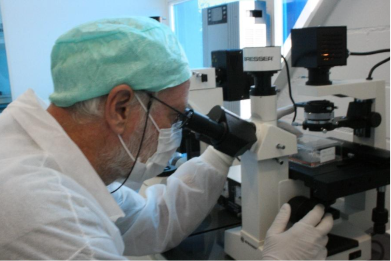
Before stem cell banking occurs, a few steps are needed. First, a sample of tissue is extracted and sent to a laboratory for tests and eventual MSC isolation. Commonly used tissue sources for MSC isolation in adults are fat (adipose), blood, dental pulp, and bone marrow; Mesencell mainly uses adipose tissue as the starting material for MSC isolation.
Before any tissue sample proceeds to cell isolation, the tissue sample is tested to ensure the sample is not contaminated. Additional tests of sterility are performed routinely throughout the manufacturing process—from initial sample intake to cell isolation and cell culture procedures. Once the tissue sample passes the initial sterility tests, the MSCs are isolated from the sample and undergo another round of testing to ensure identity.
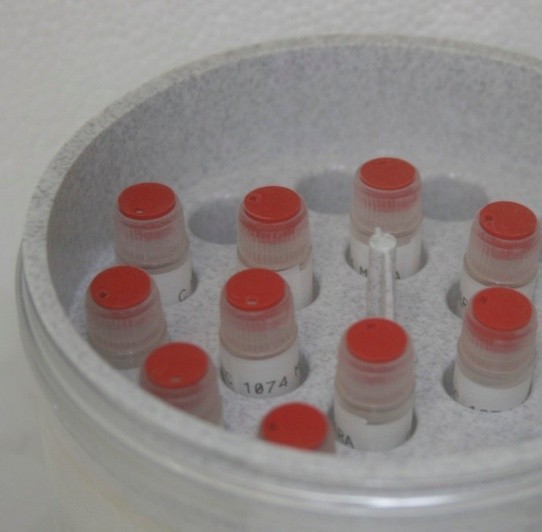
After testing confirms the viability of the MSCs, they are banked via cryopreservation, essentially freezing the adult stem cells in time for future therapeutic use.
Like drawing upon a savings account for emergency expenses, banking your own stem cells may provide insurance for your health and well-being.
Different Types of Stem Cell Banking
Adult Stem Cell Banking differs from cord blood banking in terms of tissue source (umbilical cord blood versus fat, etc.) and type of stem cell isolated.
The primary stem cells isolated from umbilical cord (UC) blood are hematopoietic stem cells (HSCs). The umbilical cord HSCs have limited potency (ability to differentiate into various cell types)—they can only differentiate into different types of blood cells, such as platelets. UC blood HSCs can be used to address potential blood disorders such as sickle cell anaemia or leukaemia.
However, banking a newborn’s umbilical cord tissue (as opposed to blood) is another option. Whereas cord blood is rich in HSCs, cord tissue contains many MSCs. Unlike HSCs, MSCs have greater potency and have the potential to differentiate into a wider variety of tissue types, such as bone, cartilage, skin, and microvasculature. The greater potency makes UC-MSCs valuable for regenerative medicine. However, this differentiation capacity is thought to account for only part of the powerful regenerative properties of MSCs (more thoughts on this below).
For most adults today, cord tissue banking wasn’t available when they were born. Fortunately, adults still have access to the regenerative potential of their own MSCs with Adult Stem Cell Banking.
- Mesenchymal stem cells from adipose tissue, skin, umbilical cord
- Haematopoietic stem cells from umbilical cord and bone marrow
- Monocytes from peripheral blood
- Dendritic Cells from peripheral blood for immunotherapy
- Natural Killer Cells from peripheral blood for cancer treatments
- T Lymphocytes as starting point for CAR-T Cell treatments
Who Should Bank Their Stem Cells?
Nearly everybody, including those of an advanced age, should bank their MSCs.
Contrary to conventional wisdom, it’s never too late to bank your own stem cells. A common misconception is that only a young person’s stem cells can offer therapeutic benefits.
However, this is not the case. Firstly, as mentioned, receiving an allogenic transplantation—even when it’s from a relative—raises a potential risk of rejection if proper tests are not conducted. Secondly, even though stem cells are affected by age, there are still living, viable MSCs in the body that can positively impact your health, even as you age.
Mesencell can, through the process of culture expansion, increase that number of pure and potent MSCs in the body, regardless of age. In fact, Mesencell has cultured MSCs for clients who were in their nineties when they first banked.
What Is the Process of Stem Cell Banking?
The process is simple. First, a qualifying blood test screens for communicable diseases. Then, provided the communicable disease test results are negative, an individual can proceed with the extraction procedure.
- For adipose tissue, this is a mini liposuction with local anaesthesia.
While awake, 50-100 millilitres of adipose tissue are extracted from the area of the body around the navel or between the ribs and hips. This one-time procedure provides the tissue sample needed to create a lifetime supply of MSCs: your Foundation Bank.
After the adipose tissue extraction, the sample is sent to our state-of-the-art facilities in the Sultanate of Oman’s Current Good Manufacturing Practices (cGMP) lab for processing. Our quality control department receives the sample and performs rigorous quality and sterility tests to ensure the sample is not contaminated. Next, the samples are transferred to the cell-manufacturing clean room for processing.
It is at this point that the MSCs are isolated from the tissue sample through a validated process involving enzymatic digestion (the fat tissue is broken down into individual cells) and differential centrifugation.
The isolated MSCs are subsequently grown (cultured) in the laboratory in a tightly regulated environment. MSC growth is monitored daily to ensure the cells stay healthy and free of contaminants. During this time, the number of MSCs will multiply in culture. At various set points of this culture expansion process, the MSCs will be cryopreserved (frozen) and tested for contaminants.
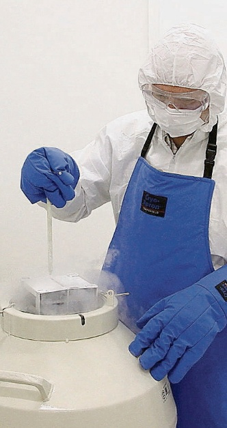
The cryopreserved cells are stored in cryogenic storage tanks (partially filled with liquid nitrogen) at -300 degrees Fahrenheit, allowing them to be stored indefinitely with virtually no loss of cell viability and potency.
- For blood samples, this is the sampling of 50-100 ml peripheral blood. 50 ml is needed for one treatment. During the process, which takes 6-20 days in our laboratory the red blood cells are separated from the white blood cells, which in turn are then separated into monocytes, Natural Killer Cells, Lymphocytes and further processed and activated. Natural Killer Cells and CD34+ haematopoietic cells can be grown (multiplied), whereas the other cells and transformed and activated without multiplying, making the treatment success dependent on the amount and quality of the existing white blood cells. Preventive storage of your blood when (still) in good health is therefore highly recommended.
Begin Step 1 Today
Request your free medical record evaluation with our senior physicians. No obligation or upfront payment required.